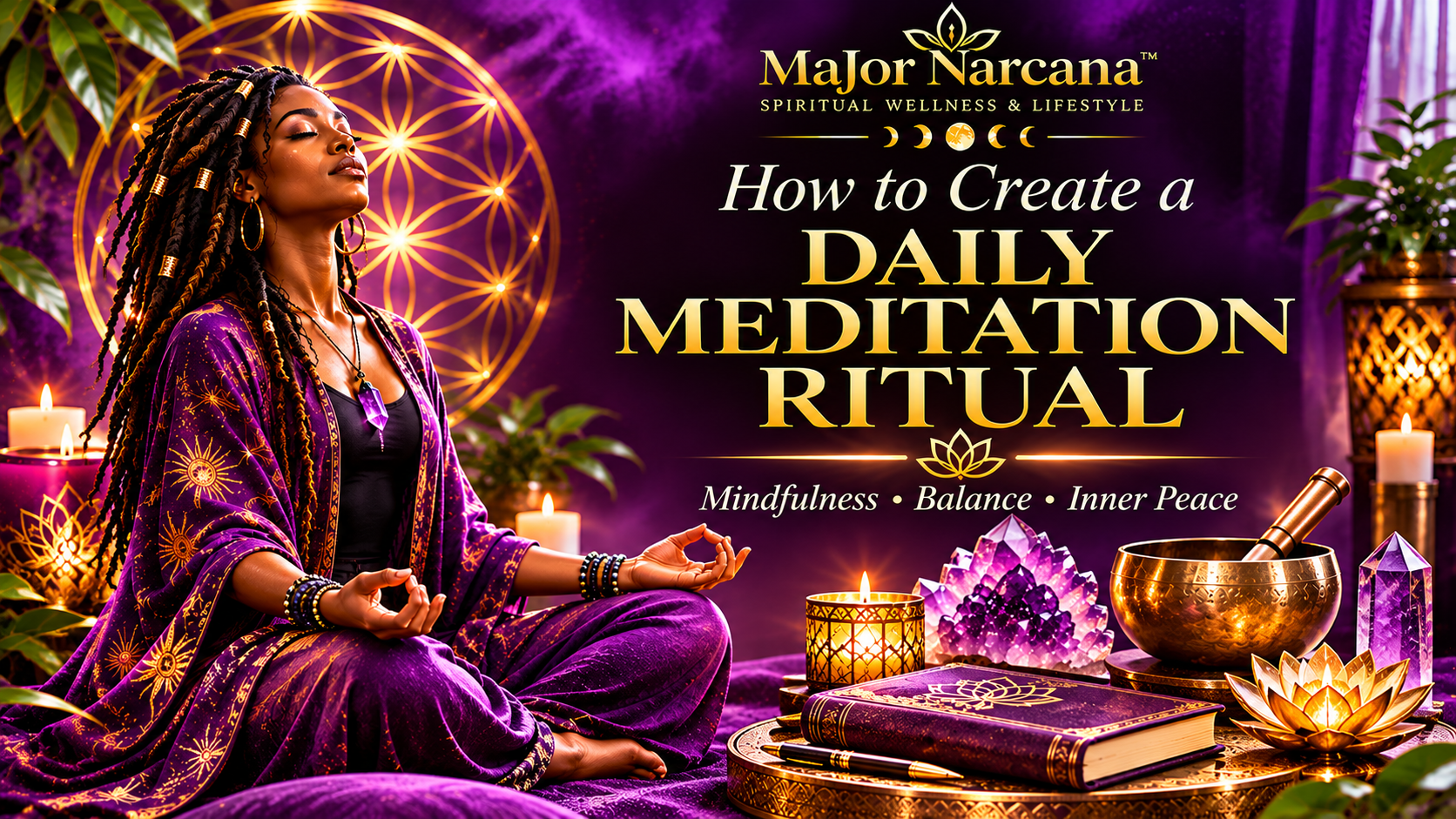
How to Create a Daily Meditation Ritual: A Beginner’s Guide to Mindfulness
Discover how to create a peaceful daily meditation practice, quiet your mind, reconnect with yourself, and bring more mindfulness into your everyday life.
Life moves quickly. Between responsibilities, relationships, work, and everyday distractions, finding a moment to simply breathe can feel like a luxury.
But what if you made stillness a priority?
Meditation is more than sitting quietly with your eyes closed. It is an opportunity to slow down, become more aware of the present moment, and reconnect with yourself.
Creating a daily meditation ritual doesn’t require expensive equipment, hours of free time, or previous experience. What matters most is developing a practice that feels meaningful and sustainable.
Whether you’re beginning your spiritual wellness journey or looking to deepen your existing mindfulness practice, this guide will help you create a meditation ritual that fits your lifestyle.
What Is a Daily Meditation Ritual?
A daily meditation ritual is an intentional period of time dedicated to mindfulness, breathing, reflection, and inner awareness.
Unlike meditation practices that happen occasionally, a daily ritual creates consistency and gives you something peaceful to return to.
Your ritual might include:
- Mindful breathing.
- Guided meditation.
- Spiritual affirmations.
- Visualization exercises.
- Crystal meditation.
- Journaling and self-reflection.
- Gentle stretching.
There is no single correct way to meditate. Your practice should reflect your personal needs, preferences, and intentions.
1. Choose a Peaceful Meditation Space
Your environment can help establish the atmosphere for your meditation practice.
You don’t need an entire room dedicated to meditation. A quiet corner of your bedroom, living room, or home office can become your personal sanctuary.
Consider incorporating:
- A comfortable meditation cushion.
- Soft lighting or candles.
- A favorite crystal.
- A yoga mat.
- Calming background music.
- A meaningful journal.
Choose items that help you feel comfortable and relaxed.
Explore our Meditation & Yoga Collection for inspiration as you create your personal wellness space.
2. Decide When You Want to Meditate
Consistency becomes easier when meditation has a regular place in your schedule.
Two popular times to meditate are morning and evening.
Morning Meditation
Starting your day with meditation can create an opportunity to establish your intentions before the distractions of everyday life begin.
A morning ritual might include:
- Five minutes of mindful breathing.
- A positive affirmation.
- Setting an intention for the day.
- A few moments of gratitude.
Evening Meditation
An evening meditation can provide an opportunity to reflect on the day and transition into a quieter nighttime routine.
Consider:
- Reflecting on your accomplishments.
- Practicing gratitude.
- Releasing the day’s distractions.
- Listening to calming meditation music.
Choose whichever time works best for your lifestyle. You can also practice both.
3. Start With Five Minutes
One of the biggest mistakes beginners make is trying to meditate for too long too soon.
You don’t need to begin with a 30-minute meditation session.
Start with five minutes.
Find a comfortable seated position, close your eyes if you wish, and bring your attention to your breathing.
Notice the sensation of breathing in and breathing out.
When your thoughts wander, gently bring your attention back to your breath.
Remember, meditation isn’t about eliminating every thought. It’s about practicing awareness without judging yourself.
As you become more comfortable, gradually increase your meditation time.
4. Incorporate Crystals Into Your Meditation Ritual
Crystals have been incorporated into spiritual practices for generations, with different gemstones carrying symbolic meanings across various traditions.
Many people enjoy using crystals as physical reminders of their meditation intentions.
Here are four popular choices:
Amethyst: Traditionally associated with tranquility, intuition, and spiritual awareness.
Clear Quartz: Often associated with clarity, intention, and amplification.
Rose Quartz: Symbolically connected with compassion, love, and emotional openness.
Black Tourmaline: Traditionally associated with grounding, stability, and protection.
You can hold a crystal during meditation, place it nearby, or incorporate it into your meditation space.
Explore our Crystals & Gemstones Collection to discover gemstones that complement your personal rituals.
Crystals are meaningful spiritual accessories for many people, but their symbolic associations should not be confused with scientifically established healing properties.
5. Use Affirmations to Set Your Intentions
Affirmations are positive statements that encourage self-reflection and reinforce the intentions you want to cultivate.
Incorporating affirmations into meditation can help give your practice a meaningful focus.
Try these five affirmations:
- I welcome peace and clarity into my life.
- I release what I cannot control.
- I deserve rest, balance, and happiness.
- I trust myself and honor my personal journey.
- I make space for growth and transformation.
Choose one affirmation each morning and repeat it slowly.
Allow yourself a moment to reflect on what those words mean to you.
6. Incorporate Journaling Into Your Practice
Meditation creates an opportunity for stillness. Journaling gives you a place to explore the thoughts and feelings that arise.
After meditation, spend a few minutes writing about your experience.
Consider these reflection questions:
- How am I feeling today?
- What is currently occupying my thoughts?
- What do I need to release?
- What am I grateful for?
- What intention do I want to carry into today?
You don’t need to write several pages.
Even a few sentences can help you develop greater awareness of your thoughts, priorities, and personal growth.
Explore our Spiritual Wellness & Lifestyle Collection for inspiration as you create a more intentional daily routine.
7. Create a Ritual That Feels Personal
Your meditation practice should feel like something you look forward to rather than another responsibility.
Personalize your routine with activities that help you feel comfortable and connected.
You might:
- Light a candle.
- Play calming instrumental music.
- Practice gentle yoga.
- Hold a favorite crystal.
- Repeat a meaningful affirmation.
- Write in your journal.
- Practice guided visualization.
You can also explore chakra meditation by focusing on the symbolic themes associated with the seven energy centers.
The important thing is to create a ritual that supports your personal wellness journey.
A Simple 10-Minute Daily Meditation Routine
If you’re unsure where to begin, try this beginner-friendly routine.
| Time | Activity |
|---|---|
| 1 minute | Get comfortable and settle into your space. |
| 2 minutes | Practice slow, mindful breathing. |
| 3 minutes | Focus on the present moment. |
| 2 minutes | Repeat a meaningful affirmation. |
| 2 minutes | Reflect on your intentions for the day. |
That’s it!
Ten minutes of intentional stillness can become a meaningful part of your everyday routine.
If your mind wanders, don’t become frustrated. Simply return your attention to the practice.
Common Meditation Mistakes Beginners Should Avoid
Starting a meditation practice can feel unfamiliar, especially if you’re accustomed to constantly staying busy.
Here are a few things to remember:
Expecting an Empty Mind
Meditation doesn’t require you to stop thinking. Thoughts will naturally arise. The practice is learning to notice them without becoming caught up in every thought.
Trying to Meditate for Too Long
Start small. A consistent five-minute practice is a reasonable starting point.
Being Too Hard on Yourself
Some days will feel easier than others. Allow yourself room to learn and grow.
Waiting for the Perfect Environment
You don’t need a perfectly decorated meditation room. A comfortable, reasonably quiet space is enough.
Treating Meditation Like Another Chore
Your ritual should be an opportunity to reconnect with yourself, not another source of pressure.
The Power of Making Time for Yourself
Creating a daily meditation ritual is ultimately about making intentional space for yourself.
It’s about recognizing that your time, attention, and well-being deserve care.
You don’t need to have everything figured out before you begin. You simply need to give yourself permission to slow down.
Start with five minutes. Create a comfortable space. Choose an affirmation. Breathe. Reflect.
Over time, these small moments can become an important part of your personal wellness routine.
At MaJor Narcana, we believe that intentional living begins with self-awareness, mindfulness, and the willingness to invest in your own personal growth.
Explore our thoughtfully curated spiritual wellness collections and discover meaningful ways to complement your meditation journey.
MaJor Narcana — Elevate Your Energy. Embrace Your Power.
Leave a Reply